
Finding the right fly line can significantly enhance my fishing experience, especially when targeting specific environments like small streams or salmon rivers. Shooting taper fly lines offer exceptional casting precision and distance, making them a preferred choice for various fishing scenarios. These lines are designed to shoot easily through the air, allowing for more accurate presentations and improved catch rates.
Budget options are available for those who want quality without overspending. I have discovered that many affordable shooting taper fly lines perform well and can stand up to the demands of different fishing conditions.
Maintaining my fly lines is crucial for ensuring their longevity and performance. Regular cleaning and proper storage help me avoid issues such as tangling and line degradation. By following a maintenance routine, I find that my shooting taper fly lines consistently deliver the accuracy and efficiency I need on the water.
Fly Line Fundamentals
Understanding fly line fundamentals is essential for effective casting and achieving success on the water. Key aspects include materials, types, and the importance of choosing the correct weight for specific fishing applications.
Material and Construction
Fly lines are typically made from a PVC coating over a braided multifilament core. This construction provides the necessary flexibility and strength. The inclusion of a braided multifilament core enhances durability and sensitivity, allowing for better line control during casts and retrieves.
The outer coating can vary, with some lines designed for floating, sinking, or a combination of both. Floating fly lines maintain buoyancy, while sinking lines employ different sink rates, depending on their intended use. Innovative materials improve casting performance and reduce tangling, leading to more productive fishing experiences.
Types of Fly Lines
Understanding the types of fly lines helps me choose the right line for different conditions. Floating fly lines are ideal for dry fly fishing, while sink-tip lines allow for easier access to various water depths. Full sink lines are another option, ideal for targeting fish that are deeper in the water column.
I prefer using specific lines depending on the species targeted. For trout, I often rely on a versatile floating fly line or a sink-tip line that helps to cover more depth. Salmon fishing requires heavier lines, often with specialized tapers to handle larger flies and aggressive water flow.
Choosing the Best Weight
Selecting the correct fly line weight is crucial for optimal casting and presentation. Fly lines are categorized by weight, ranging from 1 to 12, where lighter lines are suited for small streams and heavier lines for larger water and bigger species.
I usually follow the recommended weight range of the fly rod I am using. A mismatch can result in poor casting performance and reduced accuracy. Always consider the conditions I’ll face, including water type and species target, to ensure that I select the most effective line weight for my fishing endeavors.
Techniques and Technologies
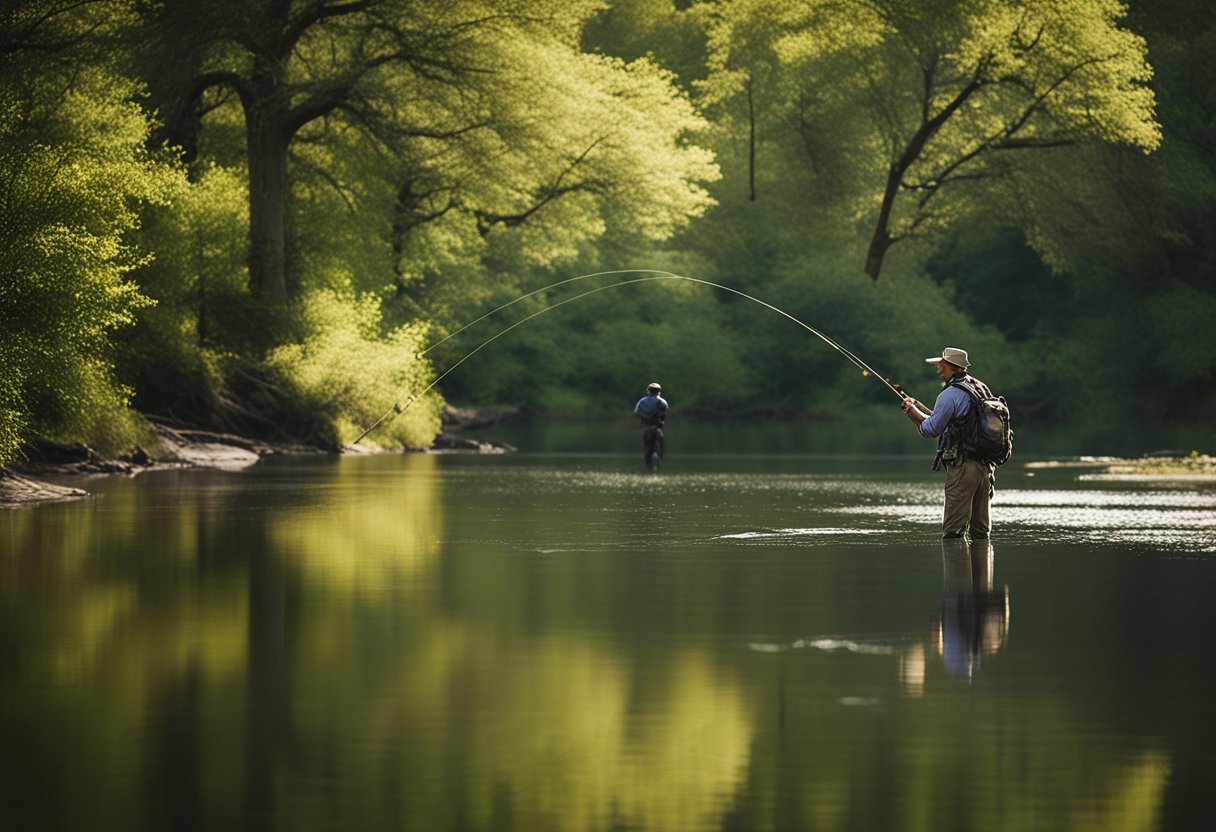
In fly fishing, effective techniques and innovative technologies play crucial roles in enhancing performance. I focus on mastering casting distance and exploring advancements in fly line design to improve my fishing experience.
Maximizing Casting Distance
To achieve long-distance casting, I concentrate on the combination of techniques like proper rod loading and smooth acceleration. Accuracy and precision are essential for hitting specific targets, so I practice my timing and line control.
Using a taper design like the Scientific Anglers Amplitude can significantly impact casting distance. This line features advanced materials that allow for smoother releases and reduces drag. Additionally, I prefer using Rio Outbound Short lines for their weight distribution, enabling me to load the rod efficiently and achieve longer distances with less effort.
Innovations in Fly Line Design
Recent advancements in fly line technology have transformed my casting capabilities. For example, the introduction of Metax materials provides enhanced durability and coating, allowing lines to glide through water effortlessly.
The versatile taper design also adapts well to various fishing conditions, making it easier to switch techniques. Many new lines incorporate low-stretch technologies, enhancing sensitivity and hook set speed. These innovations help me cast further with more control, adapting to small streams or larger bodies of water with ease.
Specialized Fly Lines for Various Fishing Environments
Selecting the right fly line is crucial for optimizing performance in different fishing environments. Each setting demands specific characteristics to effectively target various species, ensuring a successful experience.
Freshwater Fly Line Selection
For targeting trout in small streams, I prefer using a weight-forward fly line. This type allows for better control and accuracy when casting dry flies or nymphs in tight spaces. A floatable line works well, as it keeps flies on the surface or suspended in the water column.
In lakes and larger rivers, I often opt for a floating line with a longer taper. This facilitates longer casts and better line management, particularly when fishing from a boat. Lines suited for multi-purpose use often feature a tropical coating, offering durability against UV rays and ensuring performance in varying temperatures.
Saltwater Fly Line Considerations
When it comes to saltwater environments, I find that a specialized saltwater line is essential. These lines are designed to withstand the corrosive effects of saltwater and often feature a tropical coating for added protection. Targeting species like tarpon, bonefish, and permit requires a line with substantial backing capacity and a fast sink rate for deeper presentations.
I use a shorter head for quick casting in windy conditions, which is vital when fishing tropical flats. The use of heavier weights allows for effective turnover of larger flies, essential when targeting permits. A floating line is often preferred in clear water to keep flies near the surface for visual strikes.
