
When it comes to fly fishing, choosing the right fly line can make all the difference in your success. Sinking fly lines offer a strategic advantage, especially in high-altitude waters where fish often sit deeper. In this buying guide, I will share insights on selecting the best sinking fly line tailored for various fishing scenarios, including trout fishing and environments where altitude affects water behavior.

Understanding the specific types of sinking fly lines is crucial for maximizing your catch. From sink rates to line weight, each factor plays a role in how effectively your fly reaches the fish. I’ll introduce you to the top sinking fly lines on the market, detailing their features and benefits so you can make an informed decision based on your fishing style.
Navigating the world of fly lines can be overwhelming, but my goal is to simplify the process for you. With the right sinking fly line, I have found that fishing can become not only more productive but also more enjoyable as I adapt to various environments and conditions. Let’s dive into the details that will enhance your next fishing adventure.
Fundamentals of Sinking Fly Lines
Understanding sinking fly lines is essential for effective fly fishing, particularly in freshwater environments. These lines come with varying characteristics that can significantly affect my success in targeting species like trout. I will discuss sinking rates, line weights, and the critical differences between sinking and floating lines.
Understanding Sinking Rates and Line Weights
Sinking lines are designed to reach different depths in the water column. The sink rate describes how quickly the line descends, which is usually categorized as slow, medium, or fast. For instance, a line with a sink rate of 3-5 inches per second might be ideal for shallower freshwater bodies, while faster lines work well in deeper waters.
Line weights play a crucial role in both casting distance and the ability to present flies at specific depths. In most cases, a higher line weight allows for better casting performance under windy conditions. It’s important to match the line weight with your rod for optimal results. I prefer a 5 or 6 weight sinking line for trout fishing, as it balances well with my typical setups and target environments.
Choosing Between Sinking and Floating Lines
Choosing between sinking and floating lines depends on various factors, including water conditions and fish behavior. Floating lines are ideal for surface presentations, making them suitable for dry fly fishing. In contrast, sinking lines allow me to target fish that are feeding deeper, especially in lakes and rivers with significant current.
When considering conditions, murky waters often benefit from sinking lines, as they help present flies at the correct depth where trout might be hiding. Additionally, sinking lines can be a better choice when I know the fish are deeper in the water column, particularly in warmer months. In essence, the choice hinges on capturing the right presentation based on the fishing scenario.
Selecting the Right Sinking Fly Line
Choosing the appropriate sinking fly line is crucial for effective fishing, especially in specific conditions or when targeting certain species. Understanding your fishing environment and the type of fish you aim to catch will guide your selection.
Sinking Fly Line for High-Altitude Fishing
When fishing at high altitudes, I prioritize lines that can handle unique atmospheric conditions. The thinner air at these elevations can affect casting distance and line performance. I opt for lines that are specifically designed for these environments.
Key features to consider:
- Density: A type III sinking line typically works well by allowing nymphs and emergers to reach deeper waters quickly.
- Smoothness: A smooth line reduces friction when casting, which is vital for accuracy in windy conditions.
- Durability: High-altitude conditions can wear down gear faster, so investing in a robust sinking fly line is essential.
Sinking Fly Line for Trout
For trout fishing, I look for sinking lines that complement my fly selection. Whether I’m using nymphs or streamers, the right line helps to present my flies effectively in freshwater streams.
Important factors include:
- Weight: A weight-forward design can improve casting efficiency, allowing my flies to sink quickly.
- Taper: A gradual taper aids in presenting the fly delicately, which is important for wary trout.
- Versatility: A line that performs well in various fishing situations is essential, accommodating changes in water depth and current speed.
By focusing on these aspects, I ensure that my fishing experience is productive and enjoyable.
Tackle and Gear for Optimal Performance
Using the right tackle and gear is crucial for maximizing the effectiveness of sinking fly lines. Understanding the components that work together can significantly enhance your fishing experience.
Essential Equipment for Sinking Line Fishing
When fishing with a sinking fly line, I prioritize a balanced setup. My fly rod should match the line weight, typically in the 5-8 weight range for trout. A fly reel with adequate backing and a smooth drag is also essential, as it can handle the extra weight of the line.
Head weight of the sinking line influences how fast it sinks. I choose a line with the correct head weight for the depth I’m targeting. This helps in achieving the right depth quickly.
In addition, I often utilize fly fishing tackle suitable for the specific environment. Keeping various sizes of weighted flies handy allows me to adapt my approach as conditions change. Tools such as a line dressing can enhance the line’s performance by improving casting distance and sinking speed.
Knots, Leaders, and Tippets for Sinking Lines
Choosing the right knots and leaders is vital for maintaining connection and strength. I typically use a blood knot or a uni knot to connect my leaders and tippets securely. This ensures that my fly remains stable during retrieves.
The leader material should be heavier when using a sinking line, typically fluorocarbon, to reduce visibility. I prefer a leader about 9 feet long, tapering down to a tippet in the range of 2x to 4x, depending on the fly size.
When adding weight to my setup, I ensure it complements the fly rather than overpowers it. Using split shot can help sink the fly more effectively without complicating the overall presentation. Keeping these elements in mind helps me improve my sinking line fishing success.
Expert Tips and Techniques
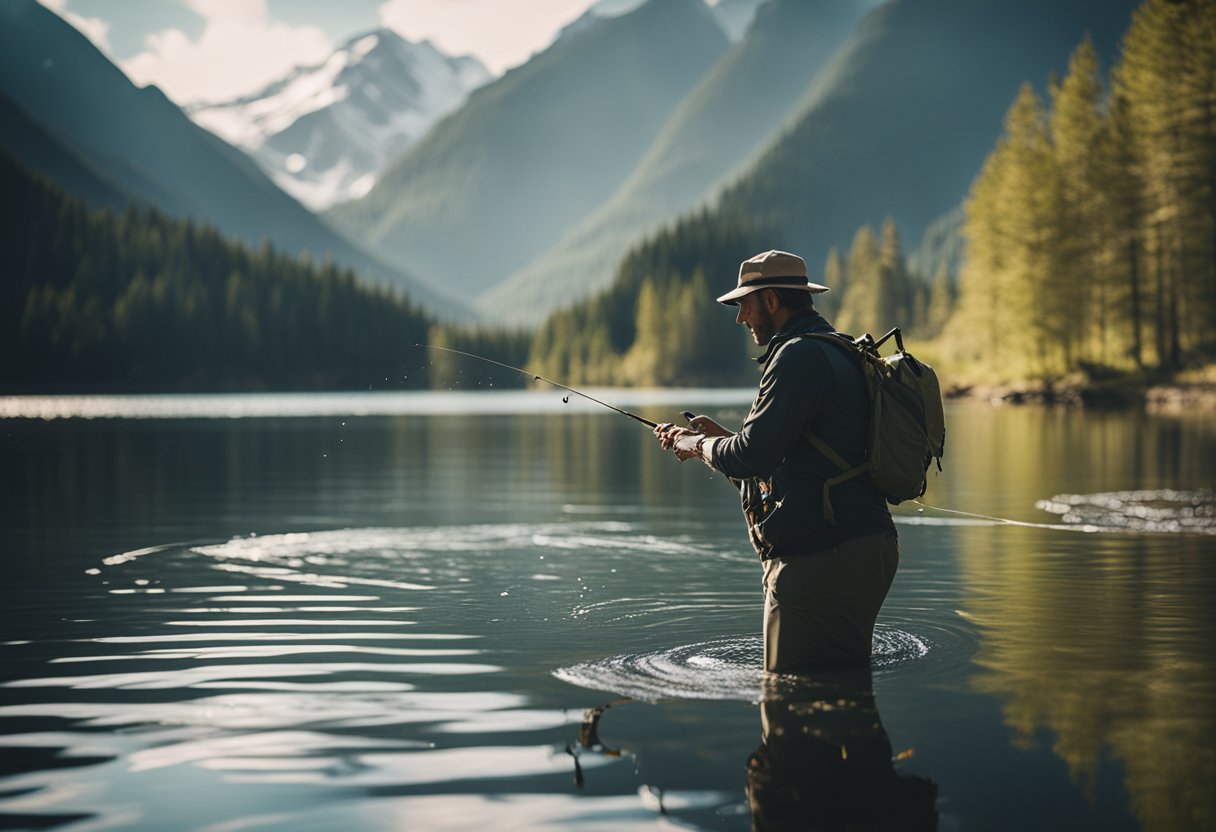
When I select a sinking fly line, I consider the type of fish I’m targeting, particularly trout. Trout can be found at various depths, so understanding their feeding habits helps me decide how deep to cast.
I pay attention to the insects that are active in the water. Matching the fly to the prevalent insects increases my chances of success.
Casting Technique: A smooth, accurate casting style is vital. I often practice my double haul to get the line to penetrate the water efficiently.
My equipment includes waders for comfort and mobility. Staying dry allows me to focus on fishing rather than the cold.
Using a fly box helps me organize flies suited for different conditions. I keep a selection of streamers for varying depths, as they can be effective for enticing trout.
When fishing in streams, I search for cover like rocks and submerged logs. Trout often hide here, waiting to ambush prey.
I appreciate the versatility of sinking lines. They allow me to explore various depths without changing my approach, making them ideal for different fishing scenarios.
Regularly checking my line’s condition is important. I inspect for wear and replace it as needed to maintain performance in the water.
